
Gathering comprehensive system information is essential for troubleshooting. This includes hardware, software, network, and user behavior data. Tools like logs, reports, and configuration files aid in identifying issues. Analyzing network and error logs helps pinpoint problems in hardware, software, or user activities. Documenting this information creates historical records, prevents recurring issues, and facilitates proactive problem-solving.
For hardware diagnostics, review logs, run specialized tools, conduct physical inspections, and use benchmarking to isolate failures. In software, automate testing, integrate system tests, analyze error messages, and ensure UI responsiveness. Correlating data from various sources enhances accuracy in complex issue diagnosis, enabling quicker resolution and preventive maintenance. Advanced diagnostic tools automate anomaly detection, improving efficiency.
In the realm of technology, effective troubleshooting is not merely a skill but an art that demands comprehensive knowledge and meticulous analysis. This guide provides a curated itinerary for IT professionals to navigate complex diagnostic challenges. We will explore systematic approaches such as gathering extensive system information, delving into logs for recurring patterns, isolating potential hardware failures, testing software components in isolation, and correlating diverse data points to ensure accurate diagnoses. By mastering these techniques, you’ll be empowered to resolve issues promptly and efficiently, elevating your problem-solving capabilities in today’s digital landscape.
- Gather Comprehensive System Information
- Analyze Logs for Patterns and Errors
- Isolate Potential Hardware Failures
- Test Software Components Individually
- Correlate Data for Accurate Diagnosis
Gather Comprehensive System Information

When troubleshooting complex systems, gathering comprehensive system information is a crucial first step. It acts as a map, guiding us to pinpoint the source of any issues. This process involves collecting detailed data across multiple dimensions – from hardware specifications and software versions to network configurations and user behaviors.
Imagine trying to diagnose a car problem without knowing its make, model, or engine type. Similarly, without comprehensive system info, troubleshooting can be akin to searching for a needle in a haystack. Tools like system logs, diagnostic reports, and configuration files are our automotive manuals, providing insights into the system’s workings and helping us identify anomalies.
For instance, consider a network slowdown. Analyzing bandwidth usage, packet loss rates, and latency data from network monitoring tools can reveal if the issue lies with hardware, software configurations, or even excessive user activity. Similarly, in software applications, error logs and user feedback can point to specific code segments causing problems. Comprehensive system information allows us to zoom in on these details, enabling precise identification of the root cause.
Furthermore, documenting this data creates a historical record, aiding future troubleshooting and preventing recurring issues. It’s akin to keeping service records for a car – regular checks and thorough documentation help maintain optimal performance over time. In an ever-evolving technological landscape, equipping ourselves with comprehensive system information is our best defense against unexpected disruptions.
Analyze Logs for Patterns and Errors
Analyze Logs for Patterns and Errors
Expert diagnostic techniques often begin with a thorough examination of system logs, which serve as a digital record of events and activities within an application or network. By carefully analyzing these logs, IT professionals can identify patterns, detect anomalies, and pinpoint specific errors that may be causing disruptions. This method is crucial because logs often contain valuable insights hidden beneath the surface, revealing issues that might otherwise go unnoticed.
When reviewing logs, look for recurring patterns or unusual spikes in activity. For instance, a sudden increase in error messages from a particular function could indicate a bug that only surfaces under specific conditions. Time stamps and sequence of events are also vital; an errant request made at 3:15 PM might be the trigger for a series of errors recorded over the next hour. By correlating log data with known system behavior, professionals can identify correlations and root causes more effectively.
Consider the following scenario: a web application experiences intermittent downtime during peak hours. Analyzing server logs reveals an abrupt surge in connection requests at 7 PM every evening. This pattern suggests that the application is under heavy load during this time, possibly due to a high volume of users or a poorly optimized database query. By identifying this pattern, the development team can take action, such as implementing caching mechanisms or scaling resources, to prevent future disruptions.
Isolate Potential Hardware Failures
Isolating Potential Hardware Failures
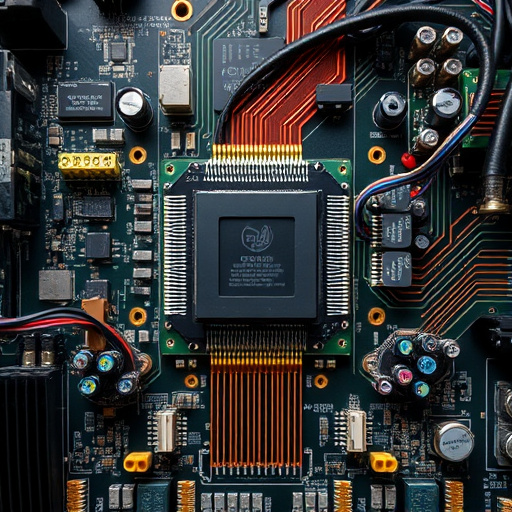
In addressing comprehensive diagnostics and troubleshooting, identifying potential hardware failures is a critical first step. These failures can manifest as system crashes, unpredictable behavior, or performance bottlenecks, significantly impacting user experience and overall system reliability. The process involves systematic checks to isolate the source of the problem, ensuring that each component is evaluated for its role in the issue at hand.
One effective method begins with a thorough review of system logs, which often provide valuable insights into recent hardware interactions and errors. For instance, repeated blue screen errors (BSEs) could indicate faulty memory modules or drivers. Analyzing these logs helps narrow down potential culprits, guiding further diagnostics. Subsequent steps include running specialized diagnostic tools that can test hardware components individually, such as hard drives, graphics cards, and RAM. These tests simulate real-world scenarios to provoke failures, thereby confirming or ruling out specific hardware issues.
Physical inspections are also crucial in this process. Checking for loose connections, especially around critical components like the power supply unit (PSU) and motherboard, can prevent intermittent issues. Visual examinations for signs of damage or wear on hardware parts, including heat sinks and fans, ensure optimal cooling and performance. Moreover, benchmarking tools can measure hardware performance against expected norms, helping to identify anomalies that might point to underlying problems. By combining these approaches, professionals can efficiently isolate hardware failures, enabling effective troubleshooting strategies.
Test Software Components Individually

When diagnosing software issues, isolating problem components is key. Testing individual parts of a software system helps pinpoint faulty elements precisely. This targeted approach ensures that any errors are identified and addressed without affecting other functional sections.
Start by testing each component in isolation, beginning with core functionalities like data processing and user authentication. Use automated testing tools to simulate user interactions and verify expected outcomes. For instance, test login functionality by attempting valid and invalid credentials to ensure secure access checks are functioning correctly. After confirming the stability of primary components, move on to checking integrations with other systems, such as databases or APIs. This involves meticulous testing of data exchange processes to uncover potential compatibility issues or data corruption problems.
As you progress, focus on UI elements and their responsiveness across different devices and screen sizes. Use emulators or real-world hardware to ensure consistent user experiences. Pay close attention to error messages displayed during testing; they can offer valuable insights into underlying problems. Analyze log files for patterns or anomalies that might indicate specific components contributing to the overall issue.
Remember, effective troubleshooting requires a systematic approach, and testing individual software components is a critical step in ensuring the stability and reliability of your application.
Correlate Data for Accurate Diagnosis

When troubleshooting complex issues, correlating data is a powerful tool for accurate diagnosis. It involves collecting and analyzing diverse sets of information from various sources to identify patterns and relationships that might otherwise go unnoticed. This method allows experts to pinpoint the root cause of problems with greater precision and efficiency.
For instance, consider a scenario where a computer network experiences frequent downtime. Data correlation would involve gathering logs from servers, network devices, and user reports. By comparing timestamps, error codes, and network activity during these incidents, technicians can identify specific triggers or patterns. For example, they might discover that a sudden surge in incoming connections consistently precedes system crashes, indicating an overload issue.
Advanced diagnostic tools also play a crucial role. These software applications are designed to gather and analyze vast amounts of data from interconnected systems. They can automatically detect anomalies, such as unusual resource utilization or unexpected behavior, by comparing real-time data against historical benchmarks. This proactive approach allows for quicker resolution times and minimizes system disruptions.
Additionally, correlating data helps in identifying hidden dependencies within complex systems. For example, in a manufacturing environment, monitoring sensor data from machinery might reveal an indirect correlation between temperature fluctuations and increased equipment failures. This knowledge enables maintenance teams to schedule preventive measures during specific conditions, significantly reducing downtime.
Comprehensive diagnostics and troubleshooting are essential tools for any IT professional aiming to identify and resolve issues effectively. By gathering detailed system information, analyzing logs for recurring patterns, isolating potential hardware failures, testing software components individually, and correlating data across various sources, practitioners can achieve accurate diagnoses. This multi-faceted approach ensures that no stone is left unturned, empowering professionals to deliver swift and reliable solutions. Armed with these techniques, the field of troubleshooting becomes an art, where intricate problems are transformed into manageable tasks, ultimately enhancing system stability and user satisfaction in today’s complex technological landscape.